
Curtains, made to measure
Curtains decide how much light and privacy a room has, and they are the thing that softens a house full of hard surfaces. Made to your windows, they hang and sit the way they were meant to.
From sheers that filter daylight to blockout fabrics for a bedroom, your local Andersens can help you work through fabric, heading, track and layering, room by room, and arrange a measure and quote.
Sheer, light filtering, blockout, layered
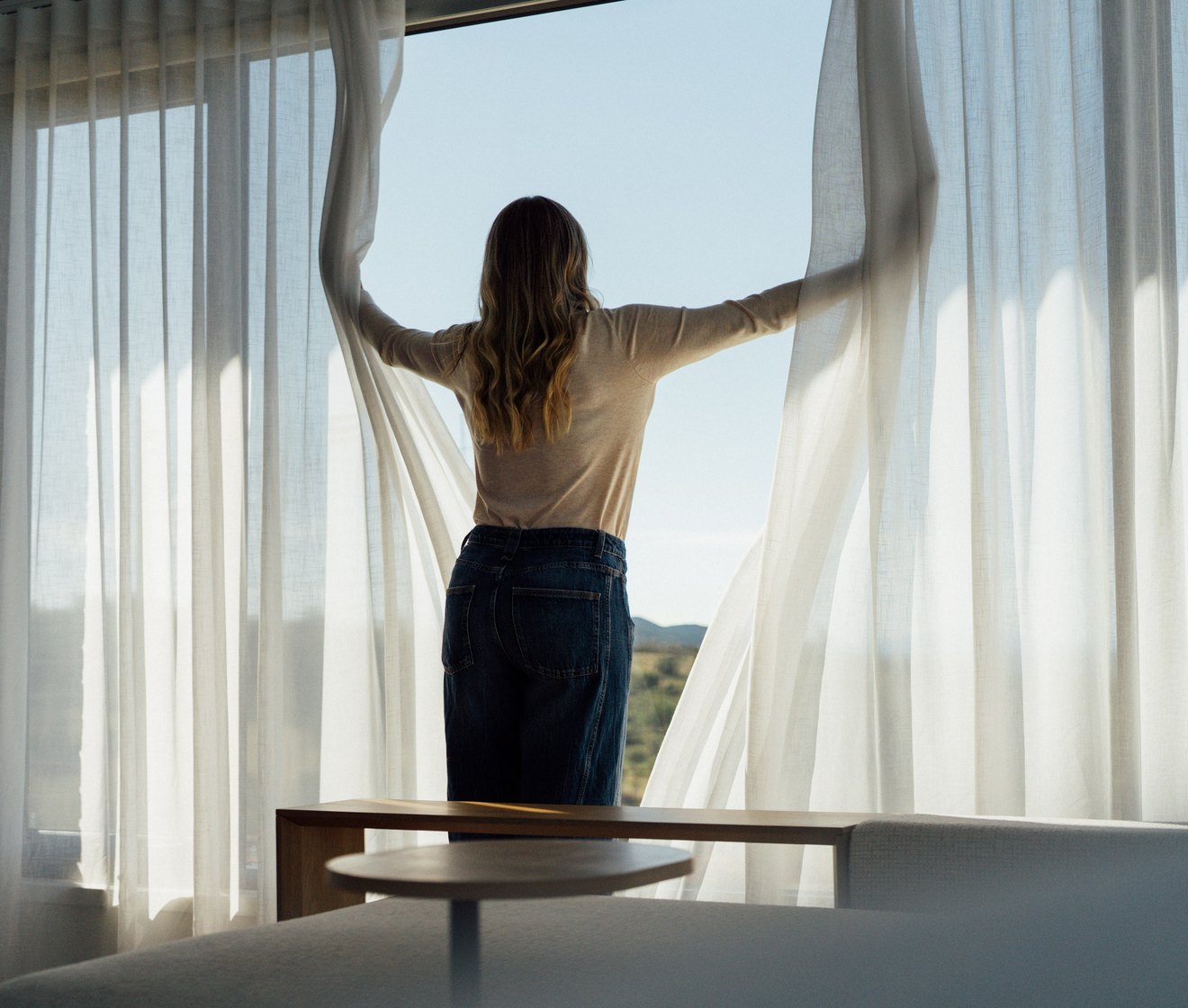
Find your way in
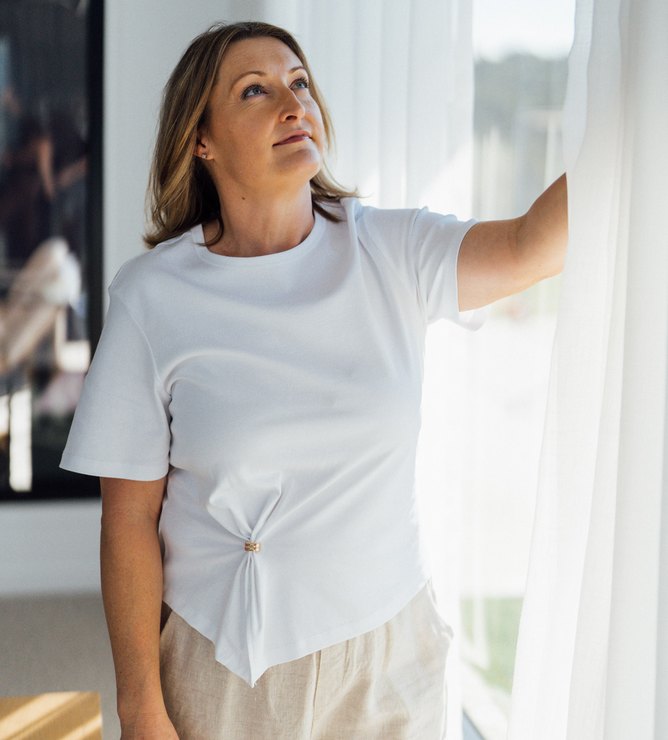

What custom curtains means
Custom curtains are made for a particular window or opening rather than bought in a set size. Depending on the range, that can mean choosing the fabric, the colour, how much light it lets through, the lining, the heading, the fullness, the track or rod, where it is mounted, the drop, which way it opens, whether you layer it, and whether it is operated by hand or by motor where that is available.
-
Where it earns its place
Large windows, sliding and stacking doors, unusual dimensions, floor-to-ceiling openings, several windows that need to match, and any room where light control or privacy really matters.
-
Where ready-made is fine
A straightforward window on a smaller budget. There is no reason to make a custom curtain out of a small bedroom window that a standard drop already suits.
-
Why fit changes the look
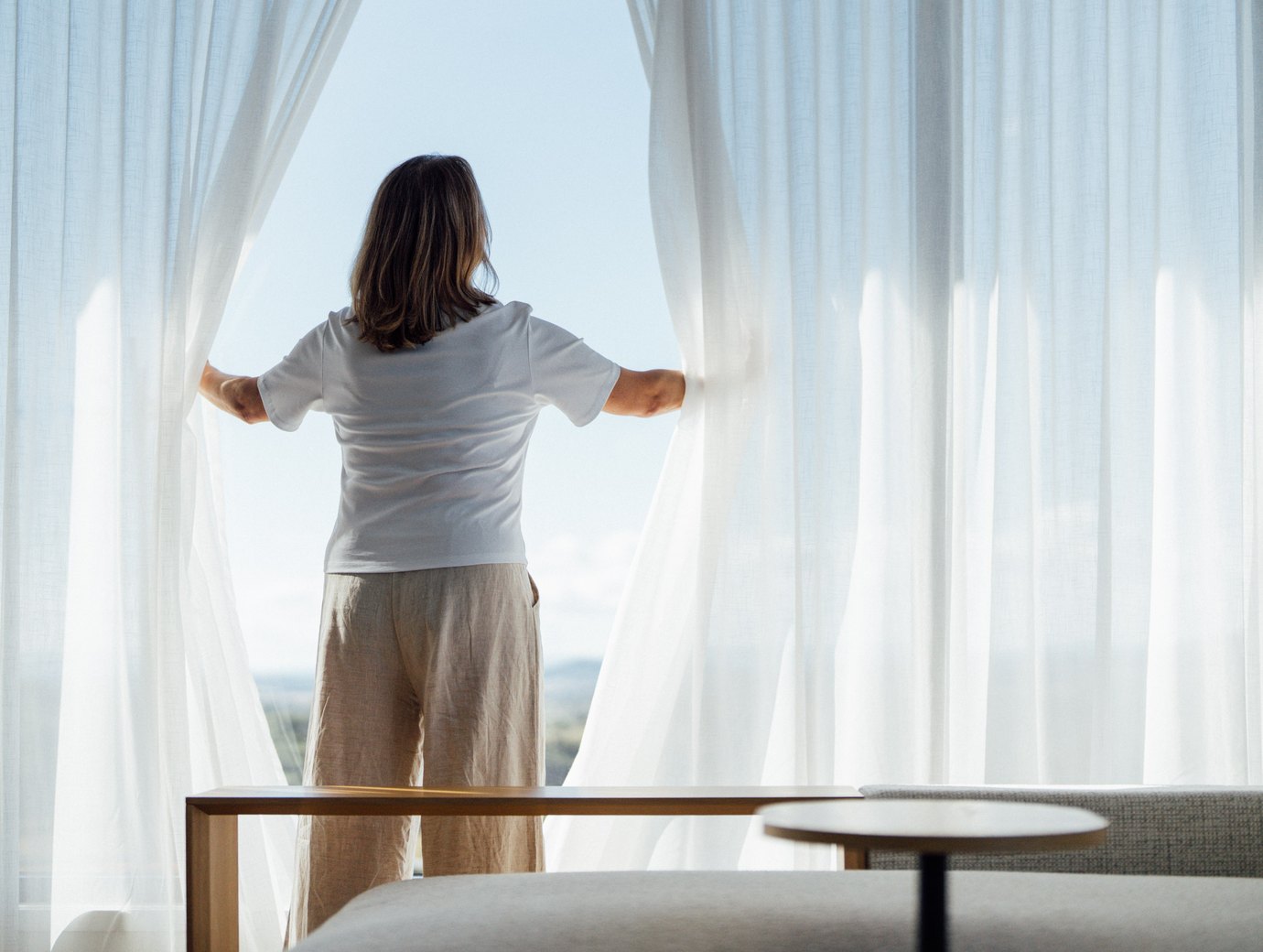
A curtain that is the right width and the right drop hangs differently from one that is close enough. It is most obvious on wide openings and on anything running floor to ceiling.
| Consideration | Custom curtains | Ready-made curtains |
|---|---|---|
| Sizing | Made to the window | Bought in set sizes |
| Fabric choice | Generally broader, depending on the range | Limited to what is stocked |
| Heading options | Several configurations possible | Usually fixed |
| Track planning | Planned as part of the job | Usually bought separately |
| Drop | Set to your floor and skirting | Standard lengths |
| Large openings | Designed around the dimensions | May involve compromises |
| Measuring | Professional measuring available | You measure |
| Installation | Can be arranged | Often do it yourself |
| Cost | Generally a higher initial investment | Often lower to start with |
Light, privacy and everything after
Work out how much light you want and when you need privacy. Fabric, colour and heading follow from that, and they are much easier decisions once the first one is made.
Control the light
Different fabrics let through different amounts of daylight. A sheer takes the harshness out of a bright room without darkening it. A heavier or blockout fabric gives much stronger control. The right answer depends on how the room is actually used and at what time of day.
Manage privacy
Privacy is not one thing. Sheers screen the view during daylight, when it is brighter outside than in, and much less so at night with the lights on. Where privacy after dark matters, that means a blockout fabric, a lined curtain, a layered treatment, or a curtain working with a blind.
Add softness to a room
Flooring, cabinetry, stone and glass are all hard surfaces. Fabric is what stops a room reading as unfinished, and it brings texture, pattern, colour, height and a bit of movement with it.
Frame a large window
Curtains do more for a wide opening than most alternatives, because fabric softens the scale of it. Track position and where the curtain stacks when it is open are what decide whether it frames the view or eats into it.
Thermal comfort
A curtain puts another layer between the room and the glass, which can help reduce heat transfer at the window. How much depends on the fabric, the lining, the fullness, how well it fits, any gaps, the window itself, where the track is mounted and whether it is layered. It varies enough that no two curtains should be assumed to behave the same way.
Acoustic comfort
A large area of fabric absorbs some of the sound bouncing around a room, which is noticeable in spaces dominated by hard flooring and glass. It softens a room. It is not soundproofing, and it will not do much about noise from outside.
Worth being clear about. Sheers are not a night-time privacy solution on their own. Blockout fabric restricts light through the fabric, but light still comes in around the edges unless the installation is planned for it. Thermal and acoustic performance vary with the fabric, the fit and the installation. Ask what a specific product does rather than what curtains do.
Sheer, blockout or both
Fabrics are grouped by how much light they let through. Most homes end up using more than one type, because a living room and a bedroom rarely want the same thing.
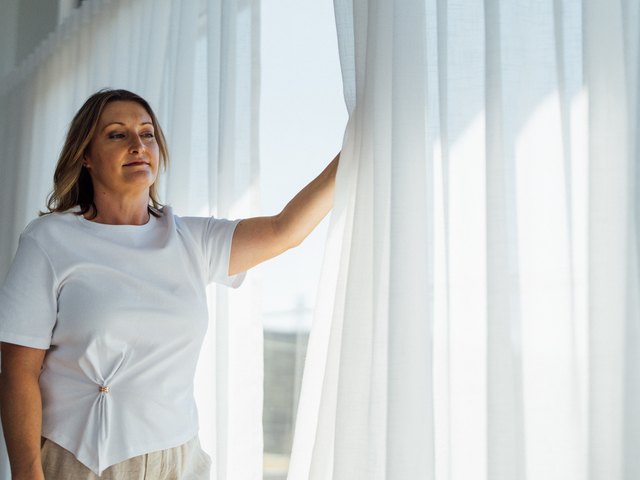
Sheer curtains
Softest light
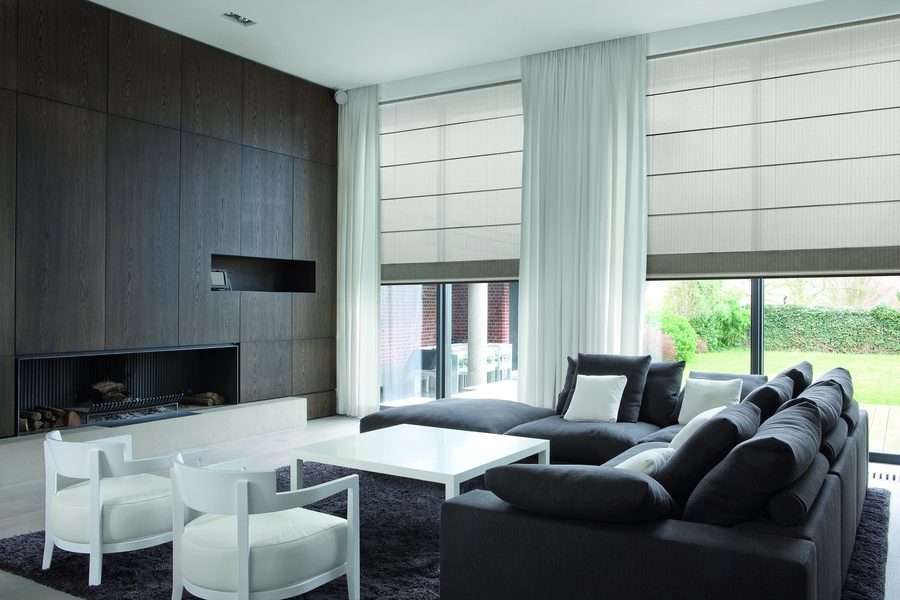
Lightweight, translucent fabric that filters daylight and softens the look of a window without closing the room down. Popular in living and dining rooms, open-plan spaces, and across large windows and sliding doors.
Sheers screen the view during the day when it is brighter outside than in. After dark with the lights on, that reverses. Pair them with a blockout curtain or a suitable blind where night-time privacy matters.

Light-filtering curtains
In between
Fabrics that sit between an open sheer and a blockout. They let softened daylight through while carrying more visual weight and more screening than a very open sheer.
Terminology varies between suppliers, so check what a particular fabric is described as doing rather than relying on the category name.
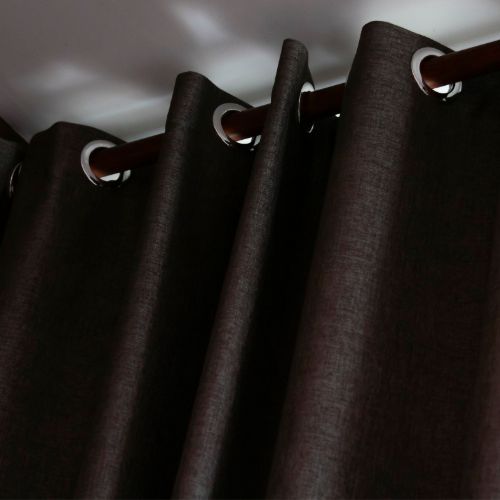
Blockout curtains
Strongest control
Fabrics made to restrict much more of the light passing through the curtain, and to give stronger privacy. The usual choice for bedrooms, nurseries, media rooms and street-facing rooms.
A blockout fabric restricts light through the fabric. Light can still come in above the track, around the edges, under the hem and at the centre opening, so room darkening is about the whole installation, not the fabric alone.
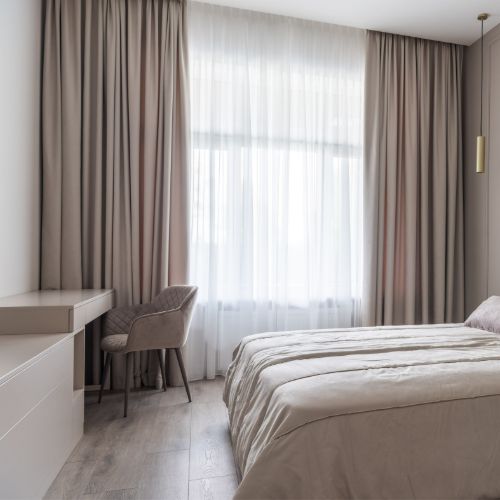
Layered curtains
Most flexible
Two treatments on one window, most often a sheer at the front with a blockout behind it on a double track. You use the sheer through the day and close the blockout at night.
Layering is the answer to most of the day-versus-night questions on this page. It costs more, because it is two fabrics, two tracks and more installation.
Not sure which type suits your rooms?
How the curtain hangs
The heading is how the fabric gathers at the top. It changes the look of the curtain and how much space it takes up when it is open, and it has to suit the track it runs on.
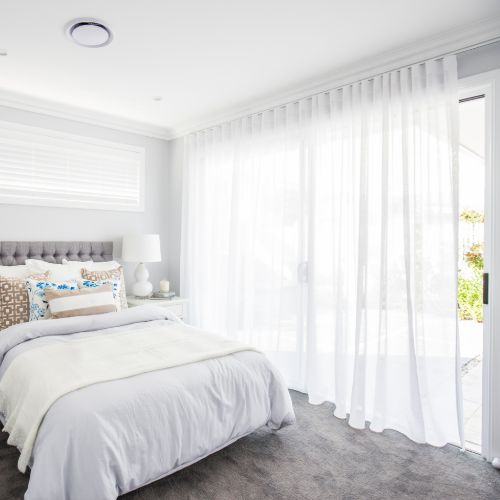
S-fold
Contemporary
A continuous wave running from the top of the curtain to the floor, on a compatible track. The repeating folds give a clean, architectural look that suits contemporary interiors, large windows, sliding doors and floor-to-ceiling curtains. Some suppliers call the same idea a wave heading.
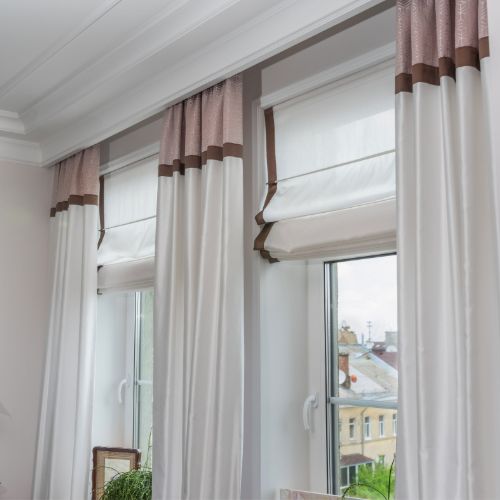
Pinch pleat
Structured
Fabric gathered into structured pleats at the heading, which gives more definition at the top than an S-fold. It suits traditional and transitional interiors, formal living rooms and bedrooms.
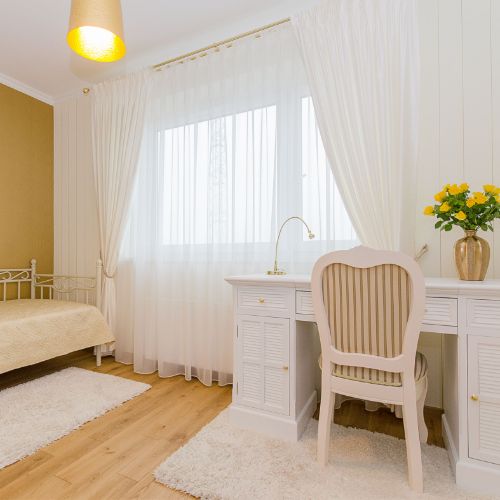
Pencil pleat
Traditional
Narrower gathered folds across the heading, for the more traditional gathered-curtain look.
Seeing beats reading here. Headings are hard to judge from a description, and which ones are available depends on the range and the track system. Ask your local Andersens to show you the headings they can make up and which tracks each one runs on.
The part that holds it up
Where the curtain is mounted changes the proportions of the room as much as the fabric does. It is worth deciding deliberately rather than defaulting to just above the window.
| Option | What to know |
|---|---|
| Curtain tracks | A track gives a clean operating system and is what S-fold curtains run on. Tracks suit floor-to-ceiling curtains, large windows and layered treatments. |
| Ceiling-mounted tracks | Mounting at or near ceiling level draws the eye up, makes the treatment feel more architectural and visually enlarges the window. Whether it can be done depends on the ceiling structure and what the installation needs. |
| Wall-mounted tracks | Used where ceiling mounting is not suitable, or where you want the curtain to sit closer to the window rather than run from the ceiling. |
| Double tracks | Two tracks so two layers operate independently, usually a sheer in front and a blockout behind. The order and spacing are set to suit the look you are after and the system being used. |
| Curtain rods | A rod is a visible decorative element rather than a hidden one, so it becomes part of the look of the room. Which headings suit a rod depends on the system. |
| Motorised systems | Where motorisation is offered it can make large, high or frequently used curtains much easier to operate, and it comes up in smart-home projects. It adds complexity to the installation. Ask your local store what is available and what it works with. |
Ceiling or wall
Taking the track to the ceiling makes the window read as taller and the treatment as more architectural, and it is the usual choice for floor-to-ceiling curtains. Mounting on the wall above the window keeps the curtain closer to the glass and is used where the ceiling will not take the fixing or the design does not call for it. What is possible in your home is confirmed at the measure, because it depends on the structure.
Options, controls and compatibility for motorised systems vary. Ask your local store what they currently offer before planning a room around it.

Choosing what it looks like
A curtain covers a large part of a wall, so colour, texture and opacity change a room more than a small sample suggests. These are directions rather than rules, and what is available depends on the range at your local store.
| Direction | What to know |
|---|---|
| White and off-white | Bright, relaxed and easy to live with, and a forgiving background when the furniture changes. Warm whites and cool whites look very different beside paint, so see them in the room. |
| Beige and natural | Works with timber flooring, natural stone, warm whites and earthy palettes. The most common starting point in Australian homes. |
| Grey | Suits contemporary interiors, but the undertone decides everything. A warm greige and a blue-grey behave completely differently beside the same wall. |
| Dark colours | Contrast, drama and a stronger frame around the window. Think about the size of the room and how much natural light it gets before committing to a dark fabric across a big opening. |
| Texture | Adds interest without a pattern, which is useful in a neutral interior where a print would be too much. |
| Pattern | Becomes the focal point of the room. Consider the scale, what else is patterned, and how the fabric reads once it is gathered rather than flat. |
Matching curtains to your flooring
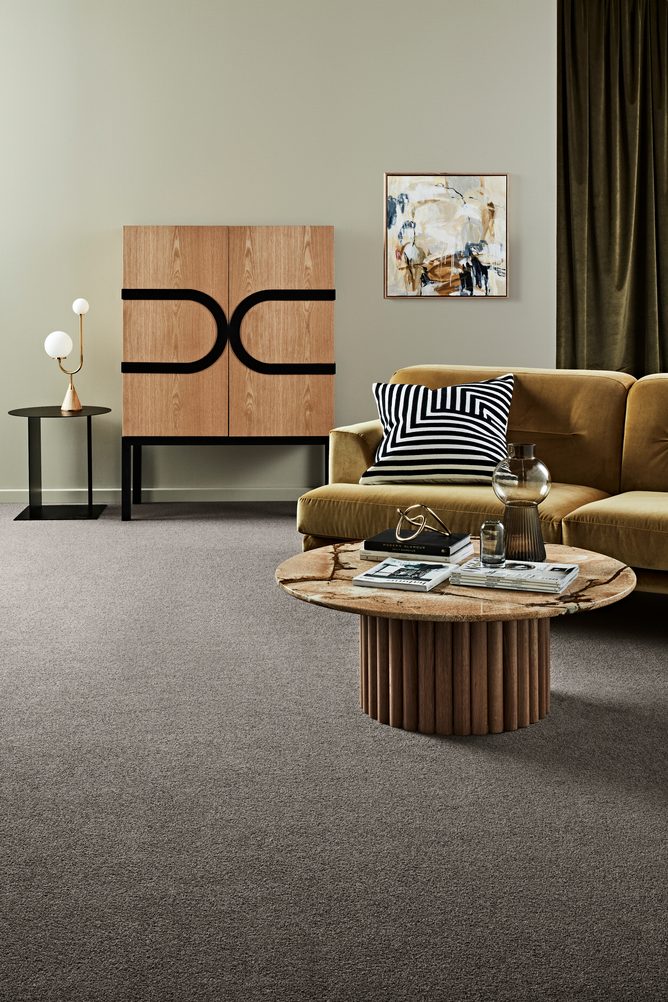
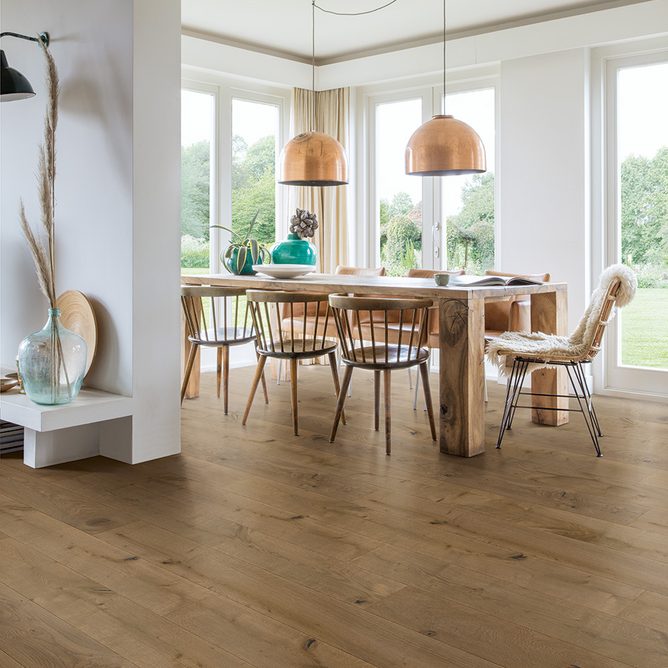
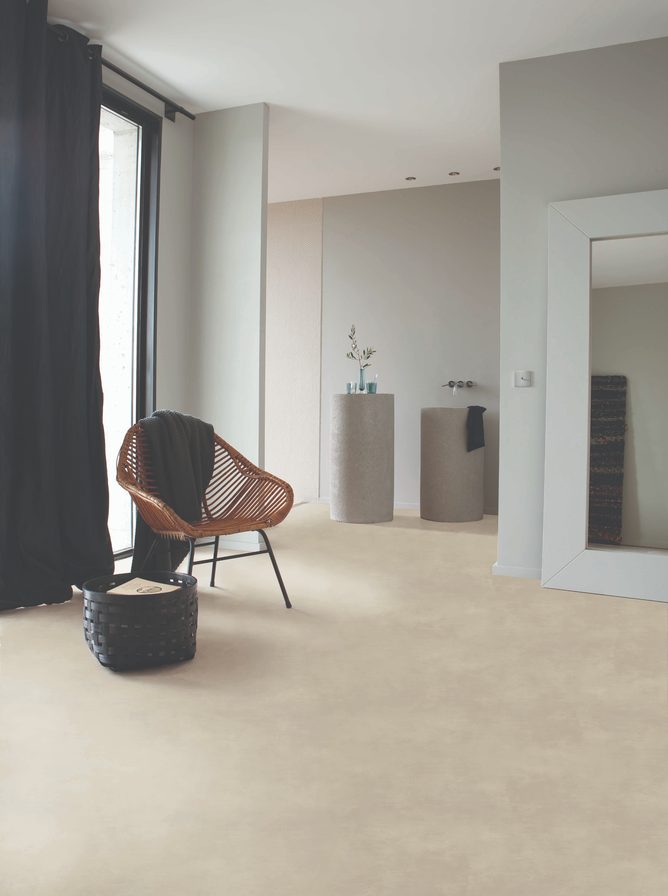
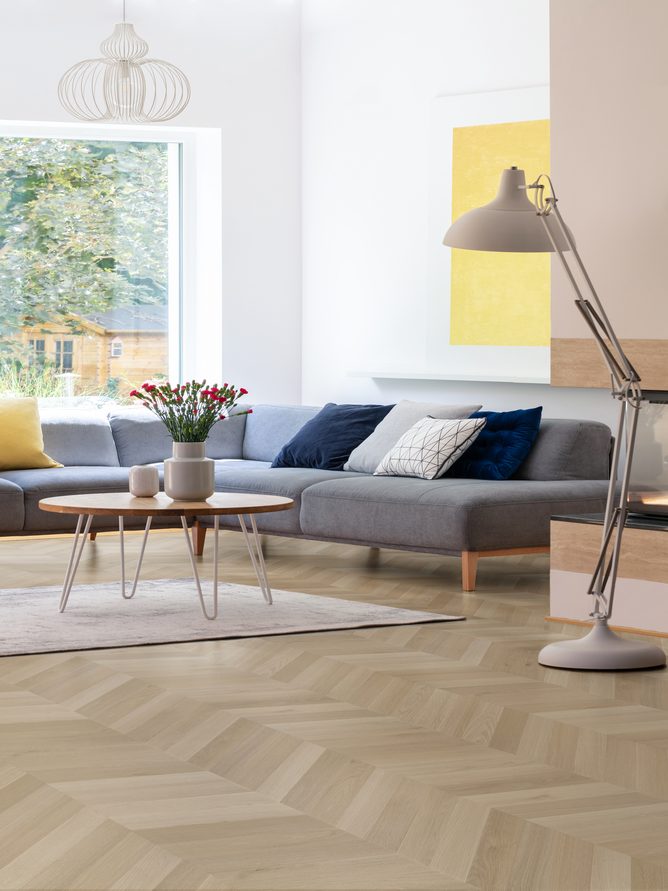
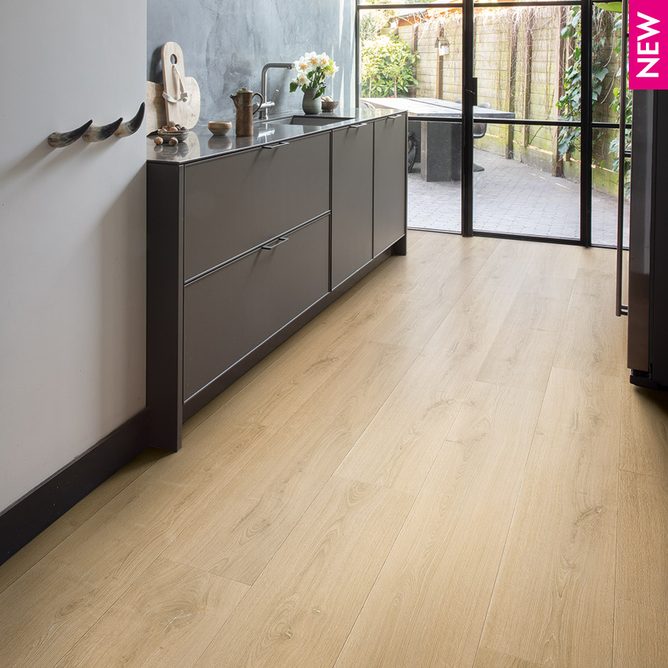
Curtains do not need to match the floor. Compatible undertones do more work than matching colours. Warm timber floors sit well with warm whites, natural linen tones and earthy neutrals. Pale oak-look floors take soft white, beige, greige and muted colours. Dark floors often look better with a lighter curtain for the contrast.
This is the one thing worth doing at Andersens rather than anywhere else. Flooring and window furnishings are usually chosen months apart and by different people, and they end up in the same room.

Look at samples properly
Fabric is the easiest thing on this page to get wrong from a photograph. See a sample in the room it is going in, in daylight and again at night, against the wall paint, beside the flooring and the furniture, and both flat and gathered if you can. Gathered fabric reads darker and more textured than a flat swatch.
Find the perfect fit for your home.
Whether you are renovating a single room or updating your entire home, discover quality flooring and window furnishings for every style, space and budget.
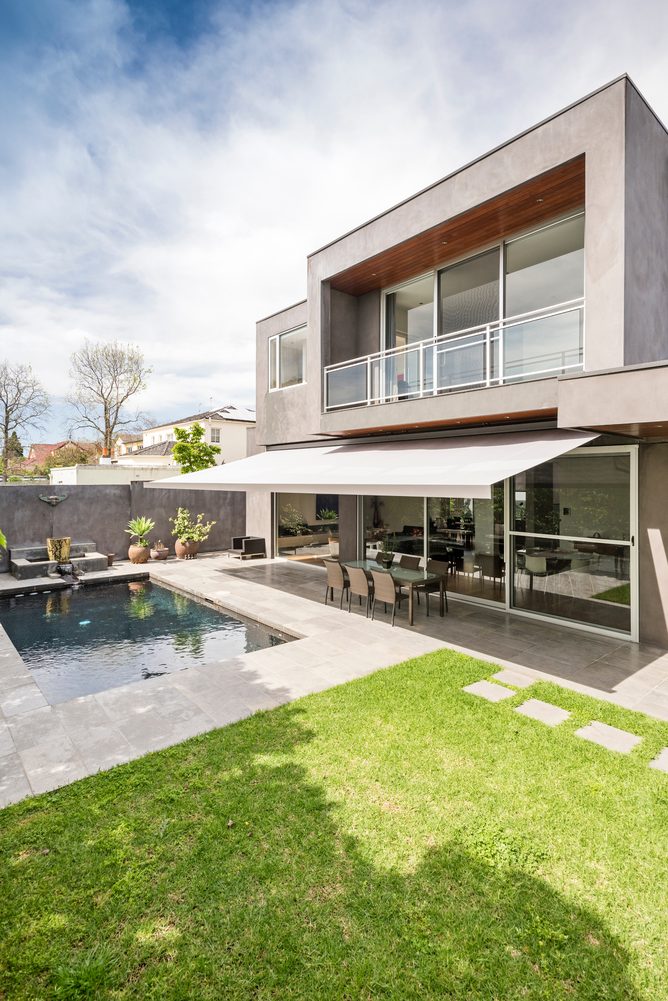
Find curtains near you
Choosing curtains is much easier when you can handle the fabric and see how much light it lets through. Visit your local Andersens to look at what is available, talk through sheer and blockout options, headings, tracks and layering, and find out which window furnishing services are offered in your area. Ranges and services vary by store, so it is worth calling ahead.
Search by suburb or postcode
Find your nearest Andersens and its opening hours, or arrange a measure and quote.
Keep looking
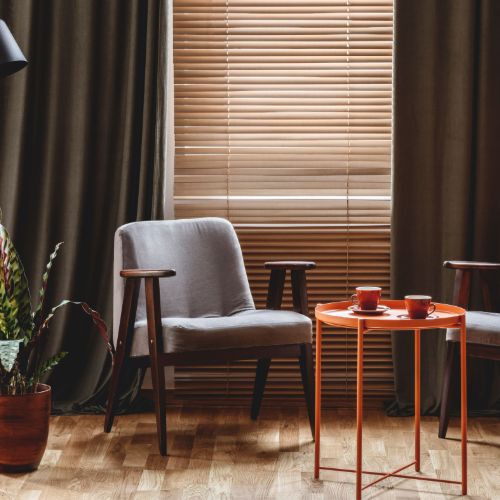

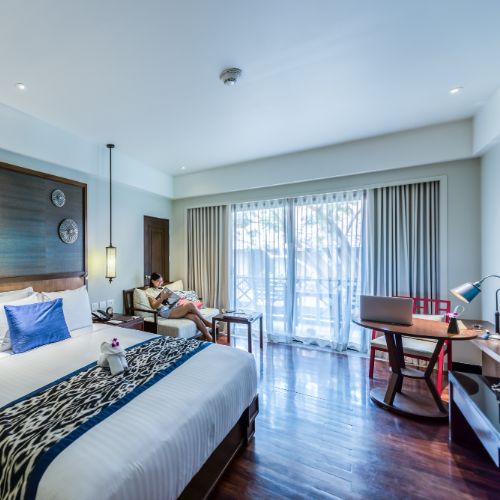
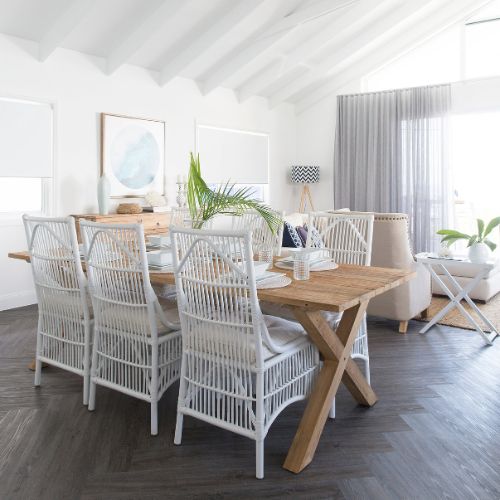
Curtains and flooring, in one conversation

The whole room, not one surface
Curtain colour and texture have to work with the flooring, the rugs, the walls and the light. Choosing them in the same place as your floor is the practical version of that.

Measured properly
Track width, drop, stacking space and clearances are the difference between a curtain that hangs right and one that does not. Professional measuring takes that off you.
Local people who see the room
Fabric behaves differently in your own light. Ask your local store what sample and in-home options they have in your area.